Why Forest Loss in the Congo Basin Requires Immediate Action
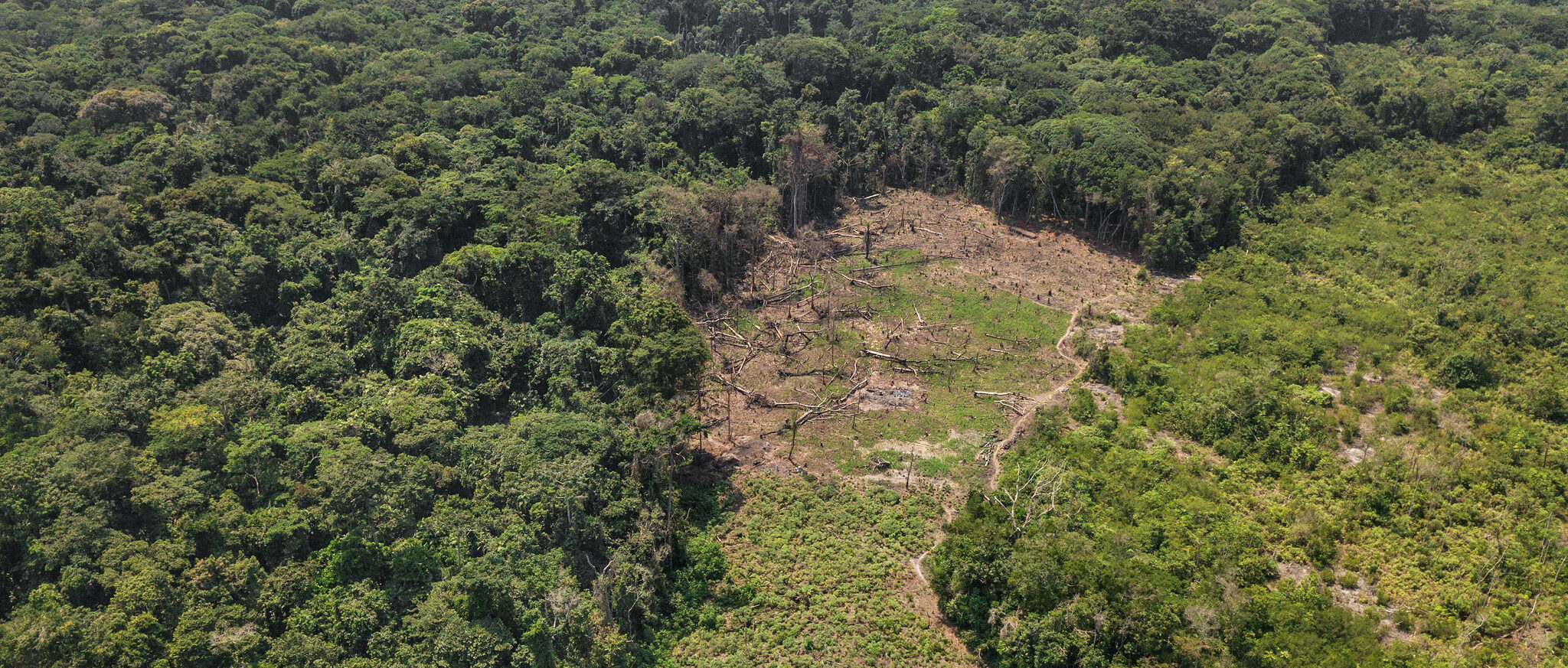
Deforestation near Lieki, DRC. Photo by CIFOR
-Axel Fassio
The Congo Basin is the largest remaining net carbon sink in the tropics, removing an average of 160 million tons of carbon dioxide equivalent (CO2e) from the atmosphere per year between 2015 and 2024 — equivalent to more than Nigeria’s fossil fuel emissions. Protecting the region’s vast forest areas is crucial for reversing global climate change and nature loss, as well as in sustaining the livelihoods of roughly 100 million people, including Indigenous Peoples.
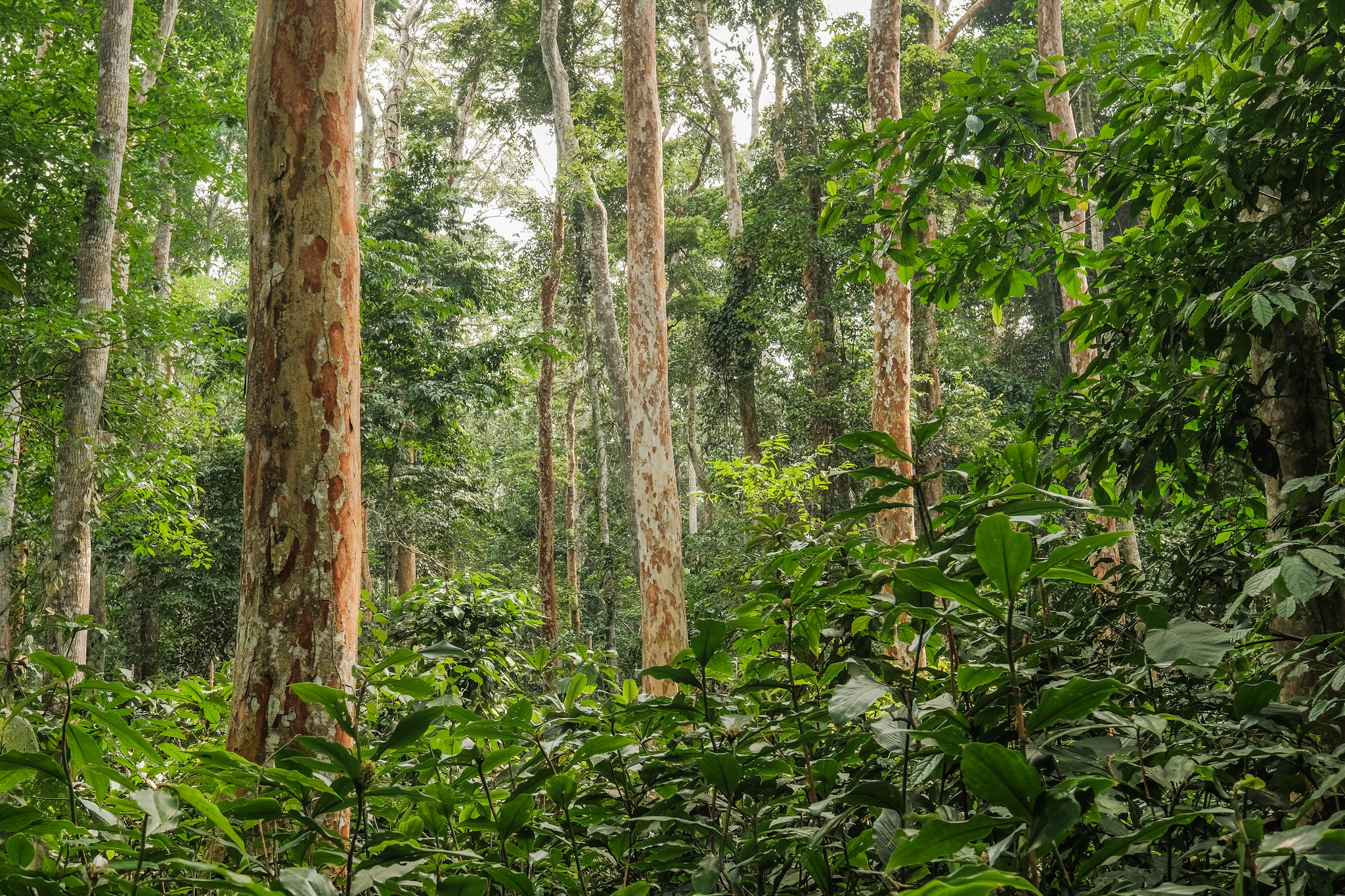
In 2024, Congo basin countries experienced relatively low rates of humid tropical primary forest loss compared to other tropical countries, with no Congo Basin countries ranking within the top 10 for percentage of loss.
Yet the region still saw an increase of 14.2% in primary forest loss in 2024 — a year of record-breaking primary forest loss in the tropics — compared to 2023.
This builds on a persistent trend where Congo Basin countries have seen relatively stable or slightly increasing rates of loss over the past decade, with no years of significant reduction. And there is little indication that rates of forest loss will decrease in the future without specific policy and technological interventions to course-correct current trends and address the root causes of primary forest loss.
Here we explain where forests are being lost in the region, discuss the different drivers of this loss, do a deep dive into countries with the highest amounts of loss and discuss interventions that could help turn the tide.
What are the trends in forest loss in the Congo Basin?
Over the past 10 years there’s been a slow but stubborn rise in the rate of forest loss, including primary forests, in the Congo Basin. The Congo Basin refers to six countries: Cameroon, the Central African Republic, the Democratic Republic of the Congo (DRC), Equatorial Guinea and the high forest, low deforestation countries of Gabon and the Republic of Congo. These countries hold some of the largest areas of primary tropical forest in the world: As of 2024, DRC’s primary forest was the second largest after Brazil’s. Other countries hold smaller areas but large proportions of primary forest: A massive 85% of Gabon’s land area is covered by primary forest, closely followed by Equatorial Guinea at 80%, Republic of Congo at 60% and DRC at 42%.
Annual rates of primary forest loss have remained relatively stable over the past decade. DRC alone contributed over 75% of these losses, followed by Cameroon (learn more on these two countries below), partly reflecting the fact that these countries contain the largest forest areas in the Congo Basin, and their relative size. Other countries, especially Gabon, Equatorial Guinea and Central African Republic, have much lower rates — for example, in 2024, Gabon had the lowest rates of loss at 0.07%, compared with 0.56% in DRC — yet these rates have also remained steady over the past decade.
In 2024, 0.44% of the Congo Basin’s primary forest area was lost, an increase from 0.38% in 2023. In absolute terms, this is 780,000 hectares of natural, often pristine forests lost in 2024 alone, the equivalent of four times the size of Douala, one of the largest cities in Central Africa.
What’s driving tree cover loss in the Congo Basin?
Agriculture
Overall, small-scale shifting agriculture — a traditional form of subsistence farming where forests are cleared for temporary planting and then left fallow for a period while forests regrow — remains the dominant driver of tree cover loss across much of the region.
However, permanent agriculture is rising, and these industrial forms of agriculture can have more serious impacts on forests. In Cameroon, 40% of tree cover loss between 2001 and 2024 was due to permanent agriculture, which is the highest in the region, dwarfing DRC’s 15%.
Cocoa farming is emerging as an agricultural driver in some countries where it is being prioritized by the government — for example, in DRC, cocoa production more than quadrupled between 2015 and 2023. While most policies support shaded and intensified cocoa farming systems, these may still lead to forest loss in highly forested landscapes such as the Tsopo, Equateur and Oriental provinces in DRC, and Centre in Cameroon.
Other drivers
Charcoal production is another major driver of forest loss in the region, especially in DRC, Cameroon and Republic of Congo , and although it does not directly lead to permanent loss of the forest, it causes widespread degradation. In DRC, around 95% of the population relies on biomass, including charcoal, for energy.
Other drivers remain small overall but do have larger impacts at the local level. Climate change has driven more frequent fires in the region, such as in the Republic of Congo , where primary forest loss jumped from 24,000 to 62,000 hectares between 2023 and 2024 with half of these losses caused by fires. Three departments of the country (Cuvette, Likouala and Plateaux) saw more than a 40% increase in primary forest loss due to fires. These areas house peatlands that store large amounts of carbon, which could be lost when they burn, leading the area to turn from a carbon sink to a source.
Mining is a relatively small direct driver of forest loss, yet its indirect impacts can be substantial to forests and communities. For example, recent evidence shows that artisanal mining indirectly causes 28 times more deforestation than directly from the area of the mine itself.
Not all forest loss results in permanent deforestation. Loss from shifting agriculture, charcoal production and fires can be temporary, while permanent agriculture, conversion for settlements, infrastructure and mining typically result in permanent loss of forest, which is considered deforestation. However, even if forest loss is not permanent, the forest may take decades or longer to recover. Understanding these drivers is crucial so that decision-makers can identify the right kind of interventions.
Trends in DRC and Cameroon
DRC and Cameroon are the two countries in the Congo Basin with both the largest areas of primary forest and primary forest loss in the past decade. Over the past five years, DRC has ranked among the top three tropical countries for forest loss globally, and Cameroon among the top 10.
We therefore dive deeper into the trends in natural and high-value forest areas in these countries, focusing on primary forests and three forest title categories — community forest concessions (designated as community forests in Cameroon and local communities’ forest concessions in DRC, legally managed by Indigenous Peoples and local communities for economic and conservation purposes); forest and logging concessions that are mainly dedicated to logging activities; and protected areas — which together represent over 80% of all legally recognized forest titles in all Congo Basin countries (excluding Equatorial Guinea).
DRC
Areas of primary forest loss vary considerably across DRC’s 26 provinces. Tshopo, the country’s largest province, lost over 49,000 hectares annually over the last decade, peaking at 63,000 hectares in 2024. Équateur, Mai-Ndombe, Sankuru and Maniema complete the top five list for provinces with largest area of primary forest losses in DRC in 2024.
In Tshopo, Kisangani (the provincial capital), and other important urban centers with large demands for food and energy, these demands drive tree cover loss. Disturbances are higher closer to Kisangani, with most clearings for food crops.
In DRC, 20% of tree cover is under management categories such as community forest concessions, logging concessions or protected areas. Not surprisingly, the highest rates of tree cover loss (all tree cover loss, not only loss in primary forests) occur outside protected areas, with logging concessions (0.76% per year) and local community forest concessions (0.61% per year) seeing the highest rates.
Community forest concessions have seen a steady increase in tree cover loss from 2015 — coinciding with a boost in community forestry in the country following the 2014 Decree on local community forest concessions. In the past 10 years, the number of these concessions skyrocketed from less than 1 million to around than und 4.5 million hectares. Undoubtedly, community forest concessions represent the single most important opportunity for Congolese forest-dependent groups to bridge the prevailing huge land right gap between customarily claimed rights and their legal recognition. These concessions are also sleeping development tools that, if allowed to reach their full potential, could improve the wellbeing of tens of millions of forest-dependent people. Unfortunately, the pace of investments for sustainable forest practices does not yet match this encouraging trend of securing tenure. Such investments are needed for secured rights to result in areas where forest conservation is coupled with economic returns for Indigenous People and local communities.
Within logging concessions, forest road developments — which cause tree cover loss — are prevalent: 78% of roads in Congo Basin forest areas were related to selective logging concessions.
Protected areas had the lowest rate of tree cover loss — at 0.26%, almost three times lower than rates in community forest concessions and logging concessions. This is promising since these areas are crucial refuges for wildlife and biodiversity conservation, and highlights that protected areas can be effective for limiting tree cover loss in DRC.
Cameroon
In Cameroon in 2024, three regions had the largest primary forest loss: South (Sud), Centre and East (Est), which hold over 80% of Cameroon’s total primary forest cover. Littoral and Sud-Ouest make up the remaining top five regions for area of primary forest loss in 2024.
The Centre region hosts Yaoundé, the capital and second largest population hub, a city in expansion. There, settlements and infrastructure are responsible for 3.1% of tree cover loss, compared with an average of 1.8% for the whole of Cameroon. Centre’s population is almost three times the combined population of East and South regions. Further, Centre is currently the largest cocoa producing region in the country, a commodity which, as indicted above, is a rising driver of forest loss in the Congo Basin. In addition, humanitarian crises in two Cameroon regions led to over 1 million people being displaced, with many likely moving to the Centre region.
In the South region, development of large hydroelectric dams, a deep-sea port and two large agro-industries in the past 10 years have had unequivocal effects on the region’s primary forests.
Tree cover loss within the three forest title categories fluctuated over the last decade, with the same patterns seen within each category. The annual tree cover loss within each category has at least doubled from 2015 and 2024.
Like in DRC, community forests have seen increased loss the past 10 years. Introduced as an opportunity for Indigenous Peoples and local communities to gain access and control over forest resources, community forests are overwhelmingly faced with a broad range of challenges, and only around 10% of all community forests are in active management — meaning legal documentation to harvest and process forest resources as per their legally approved simple management plans. Further investigation is needed into why tree cover loss is increasing and how to ensure that these areas provide for the needs of the community forest managers.
In Cameroon, like in DRC, the lowest percentage of all tree cover loss is within protected areas (0.02% per year). These areas have consistently seen a low rate of loss — about 0.15%, which is 10 times lower than the rate in logging concessions, and 48 times lower than the rate in community forests. This highlights the effectiveness of protected areas in limiting forest loss in Cameroon. However, establishing and expanding protected areas in both countries has had problematic histories of land dispossession and exclusion of Indigenous People and local communities, and therefore turning all forests into protected areas is not a viable or equitable solution.
Unlike in DRC however, forest concessions see low levels of loss at 0.1% per year. But high rates of loss are also seen in other forest titles, for example, forest reserves, council forest, sales of standing volume and agriculture industry areas see an average loss rate of 0.83% per year, much higher than the average of 0.32% for all tree cover.
Policy and technology interventions can help change course
The Congo Basin presents complex challenges to reverse current trends in forest loss. Despite commitments made by Congo Basin countries including through COMIFAC’s (Central Africa Forest Commission) 2015-2025 Convergence Plan, the region continues to experience loss of valuable primary forests with no end in sight. While there is no silver bullet solution, targeted policy and technology interventions can help turn the tide:
- DRC, Cameroon and Gabon have developed land-use planning processes, though much needs to be done for these plans to translate into effective forest management tools. On a positive note, the ongoing REDD+ process in all countries except Gabon, and Nationally Determined Contributions 3.0 offer opportunities to advance both land-use planning, and more broadly, action against unplanned deforestation. These efforts need further coordination, possibly through the upcoming newer edition of the COMIFAC’s Convergence Plan.
- Ensuring that Indigenous Peoples and local community forest managers can secure tangible benefits from the forests will be crucial. We know that communities can manage forests sustainably and while using them for their food and energy production, and that sustainable management is less likely unless those communities are leading the way and are supported so that they can effectively manage their forest lands. Governments should explore models for Indigenous Peoples and local communities to lead their own forest economies. Such economies can ensure livelihoods as well as critical cultural, climate and biodiversity co-benefits.
- Sustainability in logging concessions can be supported by efforts such as Open Timber Portal, which promotes compliance with legal requirements in timber harvest and trade by compiling information from governments, private sector and third-party forest monitors.
- Decision-makers, practitioners and others may use advances in geospatial technologies — such as through Global Forest Watch — to access, analyze and act on data on Congo Basin forests. In the interim, these technologies are already supporting a growing body of scientific research on the region, as exemplified by the 2025 Congo Basin Assessment Report.
Bright spots like the low levels of loss seen in protected areas show that through focused efforts, it is not too late to change course for the Congo Basin’s critical forests.
Explore More Articles

As Extreme Wildfires Threaten Forests, Indigenous Leadership Offers Solutions
Indigenous Peoples and local communities are among the world’s most effective forest stewards. Yet a new report from WRI and WWF-Australia finds that these lands are disproportionately affected by increasing wildfires.


